Category Archives: Written and spoken Old English

Deor

The Old English poem “Deor” is unique in that it has a repeating refrain “þæs oferēode, þisses swā mæg” (That passed away, and so may this). It also describes five disastrous events in history or mythology, which would have been familiar to the audience, and which are used to demonstrate that terrible situations can be overcome. The poet then explains his own difficulty – he has been replaced in his lord’s favour by a rival.

The five stories mentioned in the poem are:

  1. Weland was the mythical smith-god disabled by King Niðhad upon whom Weland took terrible revenge which included the rape of Beadohild, the king’s daughter and the murder of his sons, before escaping. He is depicted on the 7th century Northumbrian Franks Casket;
  2. Beadohild’s own story in which she is said to have given birth to the hero Widia;
  3. Mæthilde was rescued from drowning by the harpist Geat following her capture by the demonic River King;
  4. The reference to Þeodric is more difficult to interpret; it may be the king or his people who are suffering. The poem could refer to one of the many kings by that name. One option is that is means Þeodric the Great who ruled for 33 years at Ravenna, where he was a strong king but also a heretic in the eyes of the Roman Church. He was responsible for the death of the admired philosopher Boethius (whose work King Alfred believed was one of those “most needful for men to know”);
  5. Eormanric, King of the Goths, died in 375 CE. He appears as a cruel tyrant in a number of stories. Widia is said to have fought for him against Þeodric (the Great).

After this reference there is a more philosophical passage, quite Christian in nature, about the hardships of life.

Finally we discover that Heorrenda is the one who has replaced Deor. He was a poet who helped King Heoden to marry Hild and Deor was (until now) the poet of the same people, the Heodeningas.

You can listen to a reading of the poem and read the text and translation below.

Leofwin2010’s version (abridged) of Deor

Wēlund him be wurman wræces cunnade,      Welund of the Wurmas suffered woe,
ānhydig eorl eorfoþa drēag,                                  Proud lord, he suffered  torments long,
hæfde him tō gesiþþe sorge and longaþ,           Sorrow and longing were his company,
wintercealde wræce; wēan oft onfond               Exile cold as winter. Hardship was his lot
þæs oferēode, þisses swā mæg.                             That passed away, and so may this.

Þēodric āhte þrītig wintra                                        Theodric ruled for thirty years
Maeringa burg; þæt wæs monegum cūþ.           In the Mearings’ city. That was well-known
þæs oferēode, þisses swā mæg.                              That passed away, and so may this.

we geāscodan Eormanrīces                                    We’ve heard much ofthe wolvish nature
wylfenne geþōht; āhte wīde folc                           Of king Ermanaric who long ruled
Gotena rīces. Þæt wæs grim cyning.                    The gothic realms: that was a cruel king.
þæs oferēode, þisses swā mæg.                              That passed away, and so may this.  ic bi mē sylfum secgan wille,                                 I wish to speak about myself
þæt ic hwīle wæs heodeninga scop,                     Once I was minstrel of the Heodenings,
dryhtne dyre. mē wæs Dēor noma.                      Dear to my patron, my name was Deor.
āhte ic fela wintra folgað tilne,                               Many years I had a fine position
holdne hlāford, oþþæt heorrenda nū,                 And a loyal lord, until Heorrenda now,
lēodcræftig monn, londryht geþāh                       That skilful poet, has received my lands,
þæt mē eorla hlēo aer gesealde.                             Which once my noble lord gave to me.
þæs oferēode, þisses swā mæg.                               That passed away, and so may this
The Battle of Maldon

Image of Maldon
Image of Maldon

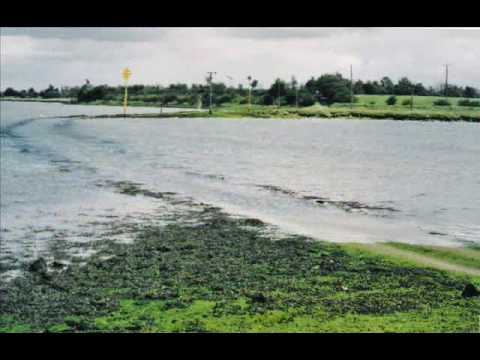
The Battle of Maldon is an Old English poem which records a contemporary event. The battle itself was fought in 991 CE on the mainland opposite the island of Northey betweent he English levy and Viking raiders, probably including Olaf Tryggvason. This is close to Maldon in Essex and the island was accessible at low tide by a causeway but isolated at high tide (a bit like Lindisfarne still is today). The Anglo-Saxon Chronicle records the defeat.

The poem deliberately copies the older heroic style of verse such as Beowulf. It is not complete, starting mid-line “…brocen wurde” so the beginning is not known and could affect the theme of the poem. It is often suggested that the battle was lost because of the leader Byrhtnoð’s pride – he allowed the invading Vikings onto the mainland to fight when they were isolated on the island at high tide. However, other interpretations are possible: the poem may be emphasising the effects of disloyalty among his men. It has also been suggested that it was a piece of propaganda against the rule of the king, Æðelred the “Unready”, whose reign suffered badly from Viking raids and the effects of disloyalty and internal fighting.

Furthermore Byrhtnoð was in a difficult postion in real life. If he had refused to allow teh Vikings ashore they could have sailed further along the coast and ravaged areas where there was no levy at all to oppose them.

Leofwin2010‘s version of Battle of Maldon – Byrhtnoth’s Challenge (ll. 42-61)

Byrhtnōð maþelode,     bord hafenode,

  wand wācne æsc,     wordum mǣlde,

  yrre and ānræd     āġeaf him andsware:

 “Gehȳrst þū, sǣlida,     hwæt þis folc seġeð?

  Hī willað ēow tō gafole     gāras syllan

  ǣttrynne ord     and ealde swurd,

  þā hereġeatu     þe ēow æt hilde ne dēah.

  Brimmanna boda,     ābēod eft onġēan:

 seġe þīnum lēodum     miċċle lāþre spell,

  þæt hēr stynt unforcūð     eorl mid his werode

  þe wile ġealgean     ēþel þysne,

  Æþelrēdes eard     ealdres mīnes

  folc and foldan.     Feallan sceolon

 hǣþene æt hilde!     Tō hēanliċ mē þinċeð

  þæt ġē mid ūrum sceattum     tō scype gangon

  unbefohtene,     nū ġē þus feor hider

  on ūrne eard     in becōmon.

  Ne sceole ġē swā sōfte     sinc ġegangan;

 ūs sceal ord and ecg     ǣr ġesēman

  grim gūðplega     ǣr wē gofol syllon.”

Byrhtnoth spoke back, raising up his shield,

waving his slender spear, speaking in words,

angry and resolute, giving them answer:

“Have you heard, sailor, what these people say?

They wish to give you spears as tribute,

the poisonous points and ancient swords,

this tackle of war that will do you no good in battle.

Herald of the brim-men, deliver this again,

say unto your people a more unpleasant report:

here stands with his troops a renowned earl

who wishes to defend this homeland,

the country of Æthelred, my own lord,

and his citizens and territory. The heathens

shall perish in battle. It seems a humiliation

to let you go to your ships with our treasures

unfought—now you have come thus far

into our country. You must not get our gold

so softly. Points and edges must reconcile us first,

a grim war-playing, before we give you any tribute.”