Category Archives: Daily life in Anglo-Saxon England

Cooking and eating

Food was cooked in pots with lids by the hearth, roasted on spits, stewed in an iron cauldron suspended over the fire, grilled, boiled, fried, steamed or broiled.* There is documentary and archaeological evidence for cookware such as jugs, kettles, pans, mortars and sieves.  There was probably always something stewing in the pot, which could be added to with whatever came to hand, and which provided something to offer to guests, whenever they might appear at the doorway.

Drawing of a traditional Anglo-Saxon oven
Drawing of a traditional Anglo-Saxon Oven

Ovens for baking bread or cooking meat seem to have been housed in communal baking-houses, so that loaves and pies would have to be marked to indicate their owners. Richer families had their own ovens, cooks and servants.

Food was eaten from wooden bowls or plates, or possibly from bread ‘trenchers’.  It was eaten with knives, fingers and spoons, but forks were unknown to the Anglo-Saxons. People drank from wooden mugs, drinking horns for the feast, or even glass goblets for those who could afford them.

The evidence suggests there were two main meal-times in the day, around noon and in the evening. They were communal occasions, and snacking secretly on one’s own, or between meals, was frowned on.  There were plenty of feast-days during the year, which needed careful preparation. Other feast-days might be at the lord’s expense, where the whole village ate and drank together.
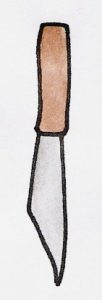
Drawing of an Anglo-Saxon knife
Drawing of an Anglo-Saxon family eating a meal.

Grain could be stored in barns, and threshed and ground as needed through the year, but more perishable food could be preserved by drying, smoking or salting.

Food and Drink

The diet of the average Anglo-Saxons would have been mostly bread and ale.

Drawing of a loaf of bread.

Of course, the story is more complicated than that! The Anglo-Saxons kept cattle, sheep, goats, pigs, ducks, geese and chickens. These provided them with meat, eggs and milk, as well as cheese and butter. Horse- and dog-meat, then as now, seem to have been taboo. They kept bees for honey, which provided the only sweetener for all but the very rich.

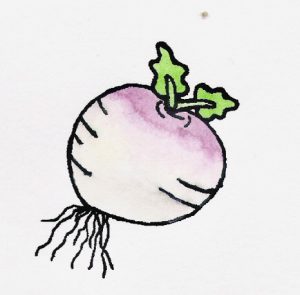
Drawing of a turnip.

They grew spelt, wheat, rye, barley and oats as the main cereal crops. Peas, beans, leeks, carrots, onions and turnips were grown for vegetables, and a wide variety of herbs was cultivated to flavour their food.

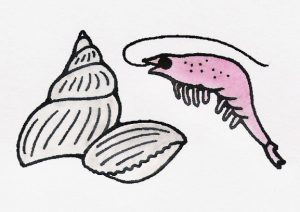
They gathered various fruits, nuts, berries and mushrooms in the ‘wild harvest’. They hunted, trapped or shot* birds, wild deer, boar, hare, fox, beaver and squirrel. They caught trout, salmon, eels, perch and pike, using nets, traps, or a rod and line, and they harvested the sea for anything they could catch. At low tide, they collected cockles, scallops and oysters, which were traded far inland.

Drawing of seafood.
Drawing of seafood.

They collected salt, and richer folk bought imported pepper and other delicacies such as olive oil, dates, figs, raisins, almonds, even rice and sugar.

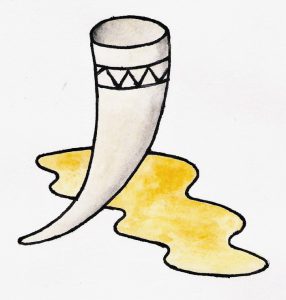
Drawing of a horn of Mead.

They drank mead, beer/ale and later in the period wine,  there were a few local vineyards.  Hot drinks were made with milk, honey, and using beer or herbal infusions.  Of course, water would have been available from the local stream or well.

Anglo-Saxons did without such things as tea, coffee, chocolate, bananas, potatoes and many other things we take for granted today.

*with bow or sling!